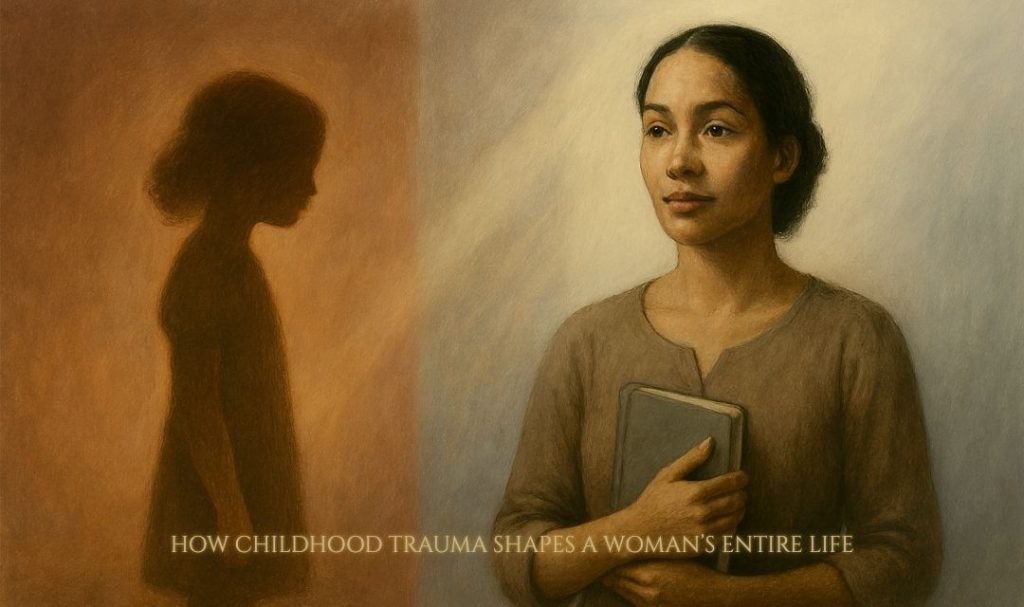
Life rarely gives us the luxury of a smooth start. For some women, childhood is a landscape marked by absence, betrayal, and the quiet accumulation of wounds that later shape every decision, every relationship, every dream. Enice Toussaint’s autobiography, captures this journey with unflinching honesty. Her story is not just a memoir, it is a map of survival, faith, and reclamation of self; a must-read for anyone interested in book about strong women.
From Early Innocence to Lasting Scars
Enice’s childhood experiences reveal the deep imprint of loss and vulnerability. Friendships that should have offered trust and comfort, like the one with Doris, instead became moments of betrayal that reshaped her understanding of intimacy and boundaries. These early experiences highlight a truth often overlooked: childhood trauma in women does not fade with age. It quietly informs how a woman negotiates trust, navigates relationships, and asserts her worth in a world that sometimes feels unforgiving. Enice’s candid reflection on these formative years is both heartbreaking and instructive, offering readers a lens into the complex emotional legacies of trauma.
Her story demonstrates that surviving trauma is not a solitary event but a lifelong campaign. Each choice, whether leaving a controlling spouse, navigating the labyrinth of the Youth Court for a name change, or deciding to publish her volumes, is imbued with the lessons and scars of her past. Toussaint shows that reclaiming identity is an act of courage, persistence, and faith qualities that are central to strong women stories.
Liberation Through Faith and Action
Faith is the compass that guides Enice through storms both literal and metaphorical. God is not a distant figure in her narrative but an intimate presence she consults before her hardest decisions. This spiritual grounding enables her to face domestic violence, legal battles, and the emotional turbulence of exile from her family home with a quiet, persistent strength. By submitting to prayer before action, she illustrates how resilience is not just about resisting trauma but channeling it into purposeful, meaningful steps forward. Travel, retreats, and writing become tools for survival rather than indulgence. From Haiti to New York, Montreal, and the serene confines of a convent, each physical journey mirrors an internal passage. Enice’s relentless drive to finish her memoir reflects a philosophy that liberation is tangible; it has paperwork, deadlines, and emotional receipts. For readers seeking inspirational reads for women, her approach demonstrates that strength is practical, grounded, and often quiet, yet profoundly transformative.
The Power of Storytelling
Ultimately, Enice’s volumes underscore the redemptive power of narrative. Her decision to reveal nineteen years of hidden life challenges societal expectations of silence and shame. Through her candid, diary-like prose, readers witness a woman navigating trauma, reclaiming her name, and safeguarding familial dignity despite hardship. Every dream, every symbolic moment, like her recurring vision of a book falling off a cliff, ties back to the idea that completing her story is essential before moving into a new life phase. Her writing teaches that courage can be stubborn rather than loud, and healing often requires distance before words. It is a reminder that autobiography can serve as a bridge when dialogue fails and that narrating the past can make the weight of memory feel almost physically lighter. For those looking for strong women stories or exploring women trauma memoir, Toussaint offers an unvarnished, essential account of resilience that resonates far beyond her personal journey.

Enice Toussaint’s autobiography is a profound example of how childhood trauma in women shapes life’s trajectory and how deliberate courage, faith, and storytelling can transform that legacy into strength. It is more than a memoir; it is a manual for survival, a testament to enduring dignity, and a beacon for women navigating their own paths from loss to self-realization.