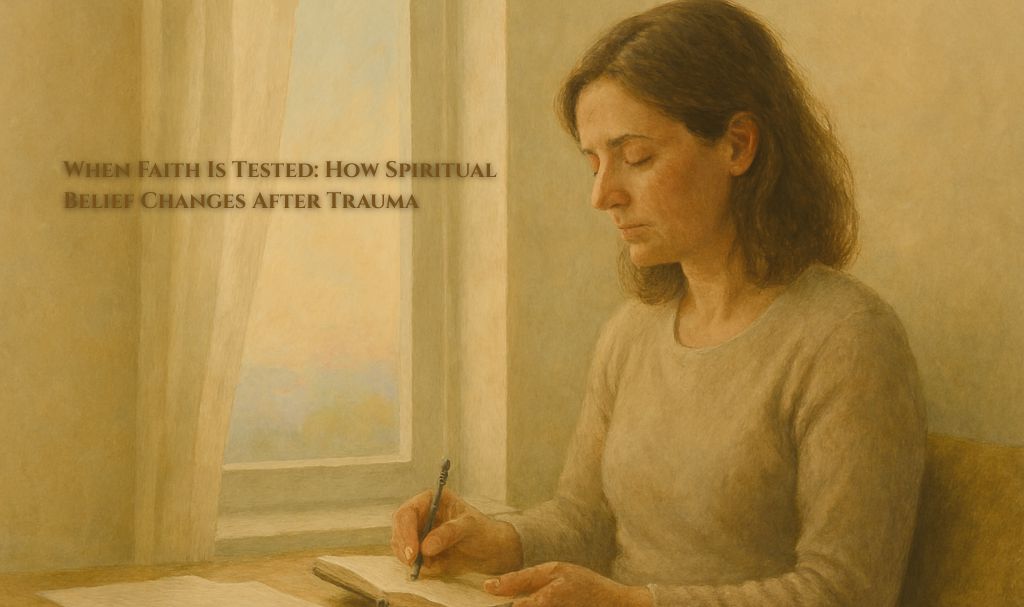
What happens to faith when the world you trusted suddenly breaks apart?
For women, faith is something that comes to them as part of their inheritance. At times woven from their childhood memories, while at other times built in from soft whispers of prayers which they hear just before they go to sleep.
But when trauma enters the picture, belief is no longer simple. It stretches, fractures, reforms. In deeply personal narratives drawn from lived experience, particularly those exploring childhood trauma in women and life as an immigrant, we see how spiritual belief does not disappear after suffering. Instead, it evolves and gives a new light to individuals who are suffering.
This transformation is stored in most of the stories that center around healing through “Tales of a multifaceted life” memoir, where faith is neither naïve nor untouched, but tested and redefined.
1. How Childhood Trauma Affects Spiritual Identity?
Faith formed in childhood often mirrors the environment in which a child grows. When safety, love, and stability exist, spiritual belief may feel comforting and secure. But how childhood trauma affects that spiritual framework can be profound.
Most of the recent research in psychology and trauma indicates that early adversity can alter one’s sense of trust in caregivers, in the world, and sometimes in God. For women who experienced instability, neglect, or emotional wounds in their formative years, faith may initially become complicated. Questions arise: Why did this happen? Where was God?
However, it is believed that trauma and faith are connected to their deepest core. For some, it intensifies their spiritual search. For others, it reshapes faith from rigid doctrine into something more intimate and questioning. In memoir-based narratives, we often see a movement from inherited religion to personally wrestled belief.
These personal memoir becomes guiding light for all those who are in search of hope and looking to explore the world around them, and this time rater differently.
2. Healing Through Memoir: Reclaiming Voice and Belief:
One of the most impactful reads is the ones that have a lasting impression on your mind days after you have put the book down. There is something uniquely transformative about healing through memoir. When survivors of trauma write their stories, they move from silence to articulation. They begin to see patterns, resilience, and meaning that were once hidden beneath pain.
Memoir writing is often connected with therapeutic practices, which emphasize narrative integration bringing fragmented memories into a coherent story. For many, particularly those reflecting on childhood trauma in women, writing becomes an act of spiritual reclamation.
Faith, in these stories, is no longer blind acceptance. It becomes a chosen belief.
Through the written word, trauma survivors often confront their anger toward God, their confusion, and their longing for hope. In doing so, they allow faith to mature. It becomes less about external validation and more about inner grounding. The fact that faith gives you strength doesn’t mean that you are going to halt the feelings of trauma, but it allows you to face them with courage and as an opportunity.
These narratives resonate strongly with readers because they feel authentic. They do not promise instant miracles. Instead, they model perseverance, vulnerability, and honest spiritual growth.
3. Life as an Immigrant and the Crisis of Belonging?
The common concept about trauma is that it is often linked with childhood. While this may not be true in most of the cases of all those who are fighting their battles of belonging and identity. For many women, life as an immigrant introduces another layer of spiritual testing. Moving across borders sometimes by choice, sometimes by necessity can disorient identity at its core.
Life after moving to another country often means leaving behind extended family, familiar culture, language, and community worship spaces. Faith traditions may feel distant or misunderstood in a new cultural context.
Immigrant women frequently face isolation, financial uncertainty, and the pressure to assimilate while preserving their heritage. In such seasons, spiritual belief may shift from communal practice to deeply personal reliance. Prayer becomes less ceremonial and more survival-based.
The impact could be multi-layered for many, it makes them more compassionate and empathetic towards others who goes through the same turmoil. Faith may grow broader, more inclusive, and shaped by exposure to diverse cultures and perspectives. In many Inspirational Memoirs, authors reflect on how immigration forced them to reconstruct both identity and belief. The process is rarely easy, but it is often transformative.
4. Faith Reconstructed: From Fragile to Resilient:
One of the key elements to notice in trauma-centered narrative is reconstruction. Childhood trauma in women could hinder their personal and professional live and thus reconstruction is essential. A woman who once believed because she was told to may now believe because she has wrestled with despair and chosen hope anyway. A survivor who once felt abandoned may discover a quieter, more personal sense of divine presence.
For immigrants, faith can become a bridge between old and new worlds. It holds memories of home while offering strength in unfamiliar spaces. For those who endured childhood trauma, faith can evolve from a symbol of unanswered questions into a foundation for healing.
To understand how childhood trauma effects they should make a conscious decision to go for therapy, community support, journaling, and spiritual practices adapted to individual needs. It honors both psychological healing and spiritual growth without forcing quick resolutions.
5. The Quiet Power of Choosing to Believe Again:
Perhaps the most profound transformation occurs when belief shifts from obligation to choice.
Trauma can strip away illusions. It exposes fragility in people, systems, and sometimes religious institutions. But in that stripping away, something more grounded can emerge.
When women share their stories as the life of an immigrant or those who have suffered due to multiple reasons, they demonstrate that faith is not static. It is dynamic. It bends without necessarily breaking.
Life after moving to another country shapes a completely new individual who believes in the quiet power of choosing and believing again. In the end, faith tested by trauma may become more compassionate, more personal, and more resilient than before. And for readers walking similar paths, such stories offer more than inspiration; they offer permission: permission to grieve, to doubt, and ultimately, to believe again in a way that feels honest and whole.