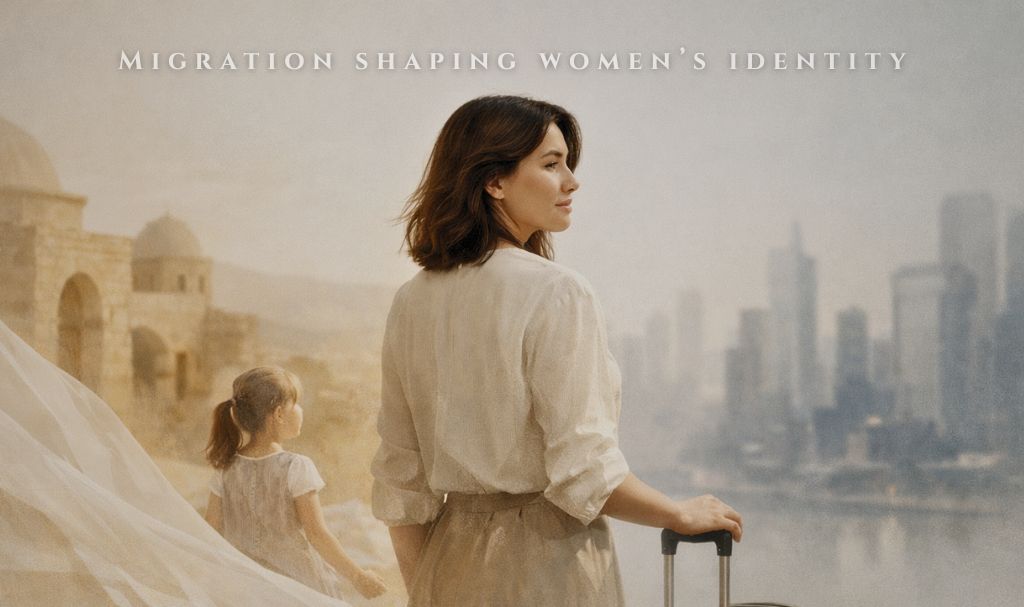
People often talk about migration in practical ways, like moving to a new country or learning a new language. But for many women, the real impact is harder to see. It appears in the way their sense of self changes over time.
In Tales of a Multifaceted Life by Enice Toussaint, this change does not happen all at once. It happens through daily choices, moments of doubt, and the challenge of adapting while still holding on to the past. What starts as a move slowly turns into a new sense of self.
Leaving One Life Without Fully Entering Another
At first, migration creates a sense of separation. Old, familiar places are gone, and nothing new feels steady yet. Even basic interactions take effort. The comfort that was once there is lost.
This stage is more than just getting used to a new place. It changes how a woman sees where she fits in. Losing what is familiar can make her feel distant from both her past and her present.
For someone who has faced instability before, this change can feel even harder. Migration adds another layer to an identity already shaped by loss or change.
Living Between Cultures
With time, adaptation begins. Daily routines become manageable. Language improves. Social expectations become clearer. But belonging is not immediate.
Tales of a Multifaceted Life shows how identity begins to stretch across two cultural spaces. There is no clean transition from one to the other. Instead, there is a constant adjustment.
A woman may find herself:
- shifting language depending on context
- adjusting behavior to fit different environments
- holding onto memories while adapting to new expectations
This in-between state becomes part of identity. It is not confusion. It is a form of awareness that develops over time.
How Migration Reshapes Relationships
Migration also changes how people form and keep relationships. Cultural expectations do not always make sense in a new place. What once felt normal might not fit anymore.
This becomes especially visible in:
- family roles and responsibilities
- expectations within marriage
- ideas of independence and decision-making
A woman might start to question habits she used to accept. She may also feel pressure to keep old traditions while trying to fit into a new place.
These challenges do not go away quickly. They take time, thought, and sometimes tough decisions. In the end, they help shape a clearer sense of self, even if it feels hard at first.
Rebuilding Identity in Small, Unnoticed Ways
Identity is not rebuilt by one big choice. It grows slowly through many experiences.
Enice Toussaint’s story reflects this clearly. Work, relationships, and daily routines start to bring a new sense of stability. At the same time, past experiences still shape how a woman reacts to new things.
There is often a quiet shift in perspective:
- past struggles are understood differently
- personal strength becomes more visible in hindsight
- independence develops through necessity rather than intention
For some women, taking time to reflect is important. Writing can help make sense of changes. It gives space to understand experiences without feeling judged.
This stage is not about turning into someone else. It is about seeing how different parts of life fit together.
Why These Experiences Matter
Stories about migration help people understand women’s lives in a deeper way. They go beyond simple ideas of success or fitting in. Instead, they show how identity changes over time.
These experiences highlight that:
- belonging is not always immediate
- strength can develop quietly
- identity can hold more than one place at once
They also show that survival is not always about one big moment. Sometimes, it means being able to keep adapting without losing your sense of direction.
Identity as an Ongoing Process
There is no moment when identity feels finished after migration. Even years later, new experiences can bring back old questions.
What changes is not the uncertainty itself, but how it is managed. A woman becomes more aware of how her past and present connect. She learns to move forward without having to keep them apart.
Migration creates a wider sense of self, and that process keeps going long after the move is done.
In Tales of a Multifaceted Life, this process is continuous. Migration does not replace one identity with another. It expands it.