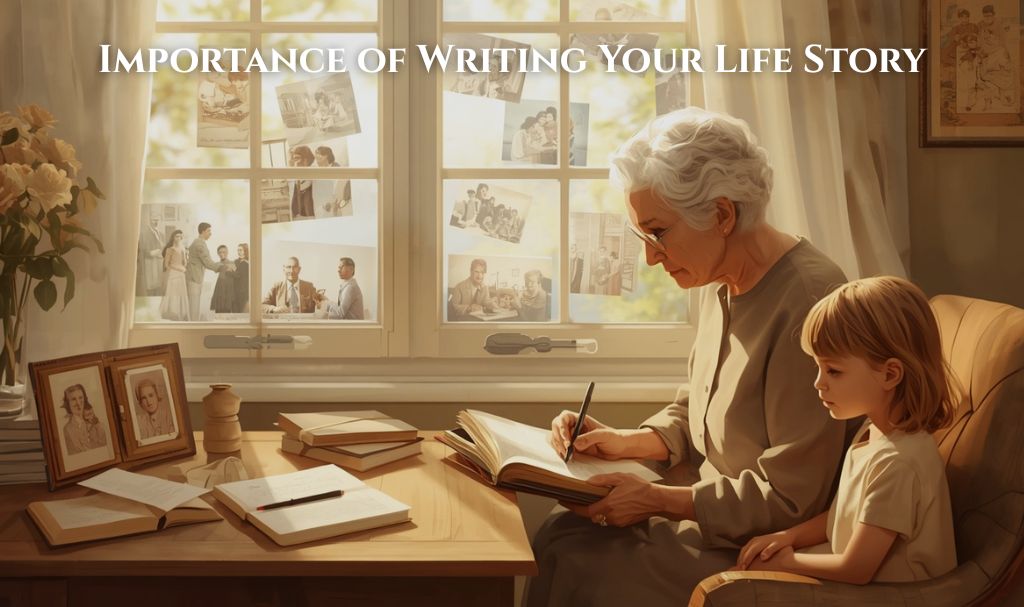
Some family stories are told so often that everyone remembers them, while others quietly fade away. A grandmother’s childhood, a parent’s first struggle in a new country, the reason someone became so protective, or the loss that changed everything, these might be mentioned only once or twice before they slowly disappear over the years.
This is why writing your life story is important.
When you write your life story, you give the next generation something they can come back to. It helps them see their ancestors not just as names on a family tree, but as real people who lived, struggled, loved, failed, prayed, and kept going.
In Tale of a Multifaceted Life, Enice Toussaint does this with patience and honesty. She shares stories about her childhood, family, loss, faith, migration, relationships, and all the changes that shaped her. Her purpose is clear: she wants to preserve these memories so her children, grandchildren, and readers can understand the journey that brought her to this point.
Memory Needs a Place to Live
Families often think they will always remember the important things, but memory is fragile.
A story that seems unforgettable to one generation might become just a few scattered details to the next. The name of a place might stay, but the feeling of that place is lost. Someone might be remembered as strong, but no one knows what made her that way.
Writing helps keep those details safe.
In Enice’s memoir, her early memories of Miragoâne are full of warmth and detail. She recalls her mother, her siblings, her school days, the rhythm of family life, and the small moments that made her childhood feel alive. These details are important because they help readers understand the emotional roots of her life.
A life story does not need to be dramatic on every page. Often, the most meaningful parts are simple: a mother making food, a child walking to school, a family gathered for the holidays, or a prayer during a scary time. These moments reveal a person in ways that dates and records cannot.
Family History Is More Than Facts
Most families can list the basic facts about the past. They know where someone was born, who they married, when they moved, or when they died. These facts are important, but they are just the frame.
It’s the story that gives the frame its meaning.
It’s helpful to know that someone left Haiti for another country. But understanding what that move felt like, what was left behind, and what had to be rebuilt gives the next generation a much deeper connection. It’s one thing to know someone lost a parent. It’s another way to understand how that loss changed her childhood, her trust, and her choices later on.
This is where a personal life story becomes so valuable. It gives family history a voice.
Enice doesn’t just list events. She remembers how they changed her. She writes about people, places, fear, hope, confusion, faith, and her journey to understand her own life. This kind of writing helps readers see the person behind the facts.
Stories Explain Why People Become Who They Are
Every family has its patterns. Some are loving, some are painful, and some are never explained.
A family might value faith deeply. A mother might be especially protective. A grandmother might avoid talking about certain years. A parent might work hard to keep the family together, even when life is tough. Without context, younger generations may notice these things but not understand where they came from.
A life story can help answer those quiet questions.
In Enice Toussaint’s story, values like faith, dignity, family responsibility, and perseverance didn’t just happen. They were shaped by real experiences. Loss taught her what could be taken away. Family separation showed her the cost of instability. Support from people like Sister Berthe showed her how much one caring person can mean during a hard time.
When those experiences are written down, the next generation gets more than just a story. They get an explanation. They start to understand why certain values mattered so much.
Writing Can Say What Was Never Said Before
Many people keep parts of their lives hidden. Sometimes they stay quiet because the memories are painful. Sometimes they don’t want to burden their children. Sometimes they think the past should stay in the past.
Sometimes, staying silent feels easier. But silence can leave families with gaps they never knew how to fill.
Writing gives people a way to speak carefully. It lets hard memories sit next to moments of love, humor, faith, and survival. It doesn’t have to accuse anyone or explain everything perfectly. It just needs to tell the truth as the writer remembers it.
That’s one of the strengths of Tale of a Multifaceted Life. Enice’s story doesn’t show life as neat or simple. She writes about her wounds, but also about the people who helped her, the prayers that carried her, and the moments that brought her peace. Her life isn’t just about suffering. It’s shown in full, with all its challenges and tenderness.
That kind of honesty can help a family understand the past without feeling trapped by it.
A Life Story Becomes a Gift Over Time
Children and grandchildren might not fully understand a life story when they first read it. Some parts might feel distant. Some details might not seem important at first.
But stories can change as readers grow older.
A child might remember the family scenes. A young adult might notice the sacrifices. A parent might understand the fear of protecting children. Someone who is grieving might come back to the story and see strength in a new way.
That’s the quiet power of writing for the next generation. The story keeps meeting people at different points in their lives.
Enice’s memoir does this well by letting her family see parts of her life they couldn’t have witnessed firsthand. Her children and grandchildren can look beyond the role she played in their lives. They can see the girl she was, the young woman she became, the losses she carried, and the faith she held onto.
Your Story Does Not Have to Be Perfect to Matter
Many people hesitate to write their life story because they think their experiences are too ordinary. They imagine that memoirs are only for famous people or those who lived through big public events.
But families aren’t built only from famous stories. They’re built from honest ones.
A life story matters because no one else can tell it in the same voice. No one else remembers the rooms the same way. No one else knows which moments hurt, who helped, which prayers were whispered, or which decisions changed everything.
Writing your life story gives your family something personal and lasting. It keeps memories from fading. It helps children and grandchildren understand their roots. It gives meaning to family habits, old photos, repeated sayings, and traditions that might otherwise lose their meaning.
Tale of a Multifaceted Life reminds us that memory needs care. A life can hold pain, joy, confusion, courage, regret, and gratitude all at once. When that life is written down, it becomes more than just a personal record. It becomes a bridge between generations. The next generation may not need every answer, but they do need to know the truth of where they came from. A written life story gives them that truth in the voice of someone who lived it.